You see your haircut from the front. Everyone else in Matthews sees it from the back and sides: in line behind you, across a table, in the photo where you are looking the other way. And the part that gives away an old cut fastest is not the top. It is the nape, where neck hair creeps down, the clean line from cut day dissolves into fuzz, and a fringe starts lying over the collar. This happens weeks before the rest of the cut looks tired, which is why a whole service exists just to fix it.
Here is how the back of the neck works, what you can safely do yourself, and where the home version ends.
Why the neck goes first
Neck hair is a border zone. Above the hairline sits the hair of your cut; below it, finer hair continues down the neck in a pattern that varies by man, sometimes in a clear swirl or a downward trail. A barber's neckline, whether tapered naturally or blocked into a squared or rounded shape, creates a deliberate boundary in that zone. Hair grows at the same half inch a month there as everywhere else, but at the boundary the contrast is stark: short, fine new growth shows against bare neck skin immediately, while the same growth on top hides among longer hair for weeks.
Shirts accelerate the visible effect. Collars rub the nape all day, bending the new growth outward, and in summer heat and sweat the fringe mats and darkens. The result reads as untidy long before it is long.
Your options between full cuts
- The barber clean-up: a short visit, often called a neck trim, line-up, or clean-up, where the barber re-establishes the neckline, tidies around the ears, and removes the neck fringe. It takes minutes and extends a cut's tidy life by one to two weeks.
- Match it to the fail point: book the clean-up when the neck fails but the top and sides still pass, usually midway through a four to six week classic-cut cycle. Fade wearers need full cuts sooner, so clean-ups serve them less.
- At home, the safe zone: with a trimmer and a hand mirror, you can remove growth clearly below the established hairline, working slowly in good light. Stay below the line the barber set; you are erasing creep, not redrawing the boundary.
- Use two mirrors, every time: a bathroom mirror plus a hand mirror behind the head is the minimum. Trimming the nape by feel or by a phone camera's flipped image is how lopsided necklines happen.
- Work in short passes and check often: take a small amount, look, then continue. Hair removed at the hairline cannot be put back, and the nape is the hardest place on your head to see your own error.
- Stop at any redesign impulse: raising the hairline, changing a tapered neck to a blocked one, or squaring a shape freehand at home almost always ends in a line that a barber must grow out to fix. That is chair work, at Bell's Barber Shop or wherever you cut.
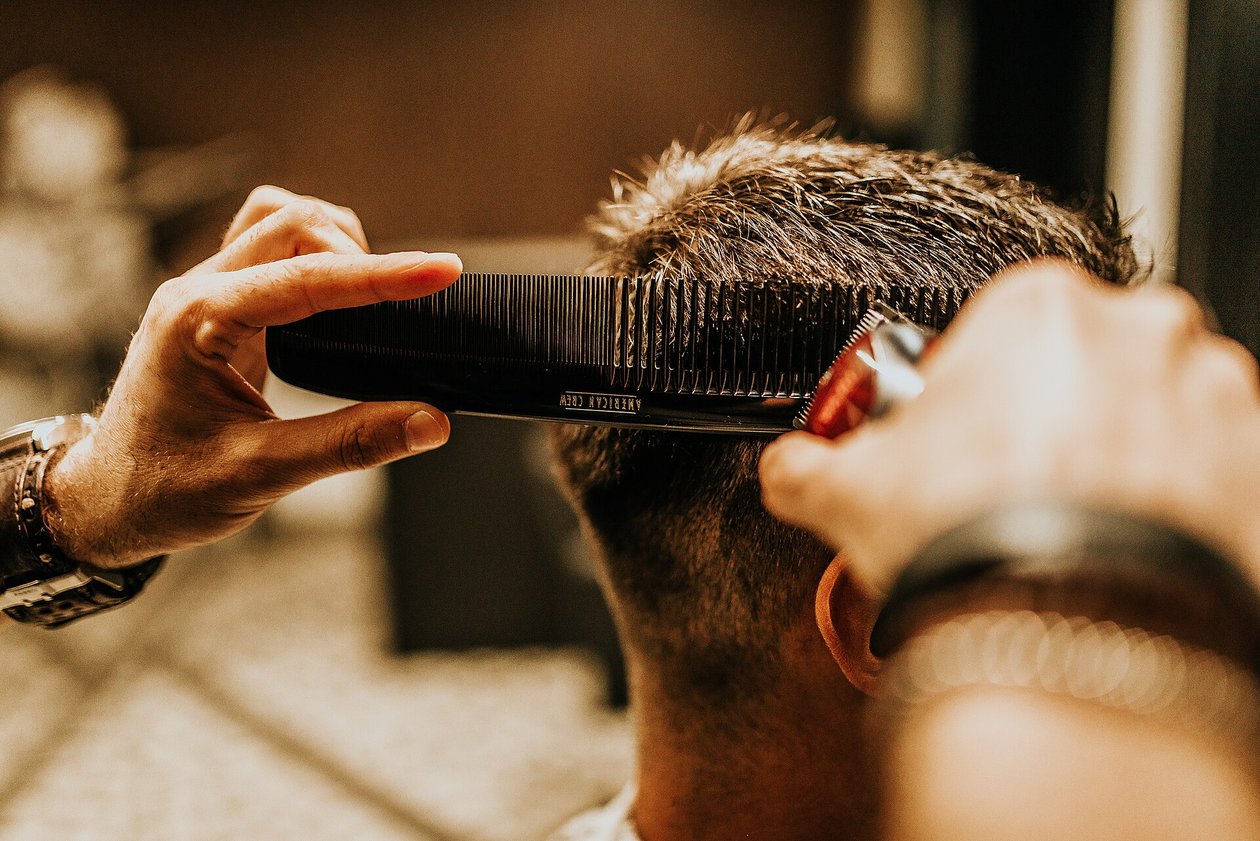
Tapered versus blocked necklines
A tapered neckline fades the hair gradually into the neck with no hard edge. It grows out the most gracefully, which is why it suits men who stretch appointments. A blocked neckline ends in a clean, defined line, squared or rounded, and looks sharper on day one but announces its grow-out sooner, because any new growth below a hard line is obvious. Neither is better; the choice is between a sharper start and a softer decline, and it is worth making deliberately rather than by default.
The collar test
A simple weekly check keeps this honest. Put on a collared shirt, turn sideways to a mirror, and look at where hair meets collar. If the fringe lies over the collar or the line has vanished into an even fuzz, the neck needs attention regardless of how the front looks. Two minutes of checking saves the slow slide into looking generally overdue, which is how most men are described in the week before they finally book.
Common questions
How often does the neck need a cleanup?
About midway through your cut cycle: roughly every two weeks for a four-week cycle. The nape shows growth about twice as fast as the top appears to.
Can I trim my own neckline at home?
You can safely remove growth below the line your barber set, using two mirrors and short passes. Redrawing or raising the line itself should be left to a barber.
Which neckline style grows out best?
A tapered, natural neckline. It has no hard edge to betray new growth, so it stays presentable the longest between visits.
Photos in this guide are representative stock images.
← All guides from Bell's Barber Shop← Back to Bell's Barber Shop