For most men in Matthews, a haircut that runs a week late is a minor vanity problem. For service members and first responders, the same week can be a standards problem, a written counseling, or an awkward conversation with a supervisor before a shift. The cut itself is identical. What differs is that grooming standards are measured, and hair growth does not pause for busy rotations, training cycles, or a fully booked Saturday at the shop.
This is the cost of neglect in plain terms: what waiting does at each stage, and the point where a small fix stops being available and only a full correction remains.
Stage one: the invisible week
In the first week after a proper cut, growth is real but hard to see. Edges soften slightly, the fade's lowest band gains a shadow, and the top picks up an eighth of an inch that changes nothing a standard measures. This is the week where a mid-cycle clean-up, if your schedule needs one later, gets planned. Nothing needs fixing yet, which is exactly why this is the right week to book the next full appointment at Bell's Barber Shop rather than the week the problem becomes visible.
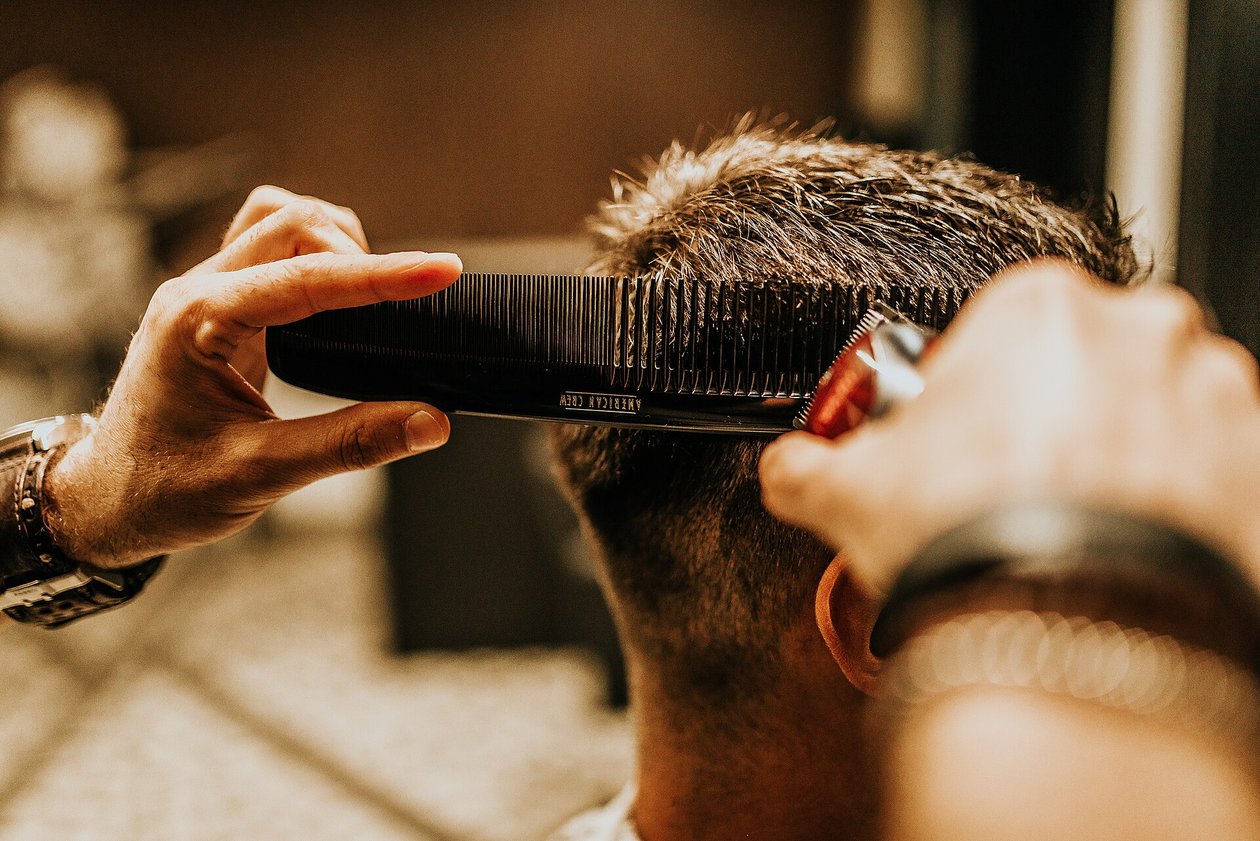
Stage two: the borderline weeks
Weeks two and three are where regulation cuts live or die. The sides carry a quarter inch of new growth where the cut may have started at skin. Bulk appears above the ears. Sideburns extend past their reference point, necks fuzz over, and the overall silhouette changes from the sharp outline of cut day to a rounded, grown shape. Standards that speak to bulk, hair over the ears, and neatness are typically judged in this window, and borderline is a gamble: it depends on who inspects, under what light, on which day.
A clean-up can rescue stage two if length and bulk still pass. It restores the hairline, temples, sideburn endpoints, and neckline, and buys roughly another week. What it cannot do is remove side bulk or restore a fade's gradient, and spending on a clean-up when those have failed is the classic wasted visit.
Stage three: correction territory
Past the window, the small fixes close off. The top touches ears or brows, the fade has become an even, fuzzy length, and the beard or mustache, where permitted, has lost its boundaries entirely. Now the only remedy is a full cut, often needed on a specific day before a specific event, which means taking whatever appointment time remains or, worse, whatever shop is available. Men in this stage also tend to attempt home corrections on the neckline or sideburns, and uneven home fixes are harder for a barber to blend out than honest grow-out.

Working backward from the date that matters
Standards risk concentrates on known dates: inspections, academy milestones, ceremonies, promotions, and official photos. Treat those as fixed points and schedule the cut two to four days before. That gap lets the fade settle into its most natural look and lets minor skin irritation from a skin-close cut fade completely, while leaving no time for visible regrowth. For recurring duties, a standing two or three week rhythm removes the calculation entirely, which is why most career service members in Matthews stop booking by feel early on.
Bring your standard or a reference photo when your branch or department has specific wording. Army, Marine Corps, Navy, Air Force, Coast Guard, and local police, fire, and EMS rules differ in their details, and a barber cutting to a document beats a barber cutting to a memory.
One more practical point: keep a simple note of what you asked for, the fade height, the top length, and any specific standard your barber cut to. If you have to use an unfamiliar shop before an inspection, that note turns a risky first visit into a repeatable order, and it protects you from the slow drift that happens when each cut is described from memory.
Common questions
How late is too late for a regulation cut?
For a high-and-tight or skin fade, past about three weeks the defining contrast is gone. Longer regulation styles can run to four weeks before standards on bulk and neatness are at risk.
Can a clean-up fix an overdue cut before inspection?
Only if the length and bulk still meet the standard. A clean-up sharpens edges; it does not shorten sides or restore a fade.
Should I cut the day before an inspection?
Two to four days before is usually better. The cut has settled, any minor irritation has faded, and regrowth is still negligible.
Photos in this guide are representative stock images.
← All guides from Bell's Barber Shop← Back to Bell's Barber Shop